

University Findings Undermine Core Electrical Theory Behind Electroshock Therapy—Prompting Citizens Commission on Human Rights International to Renew Its Call for a Ban
ECT survivors speak out about the painful practice administered to an estimated 100,000 Americans each year, including children
Los Angeles, CA, Aug. 28, 2026 (GLOBE NEWSWIRE) -- Citizens Commission on Human Rights International (CCHR) highlights a groundbreaking University of Houston study (forthcoming) that contradicts the 80-year psychiatric claim that electroconvulsive therapy (ECT) is safe. Psychiatrists have long insisted that the 0.9 amps of electric current that pulses through the brain to treat depression with ECT is “buffered” by the scalp, protecting the brain from damage. The recent research results seriously challenge this “shunting theory” and will be further examined with additional study.
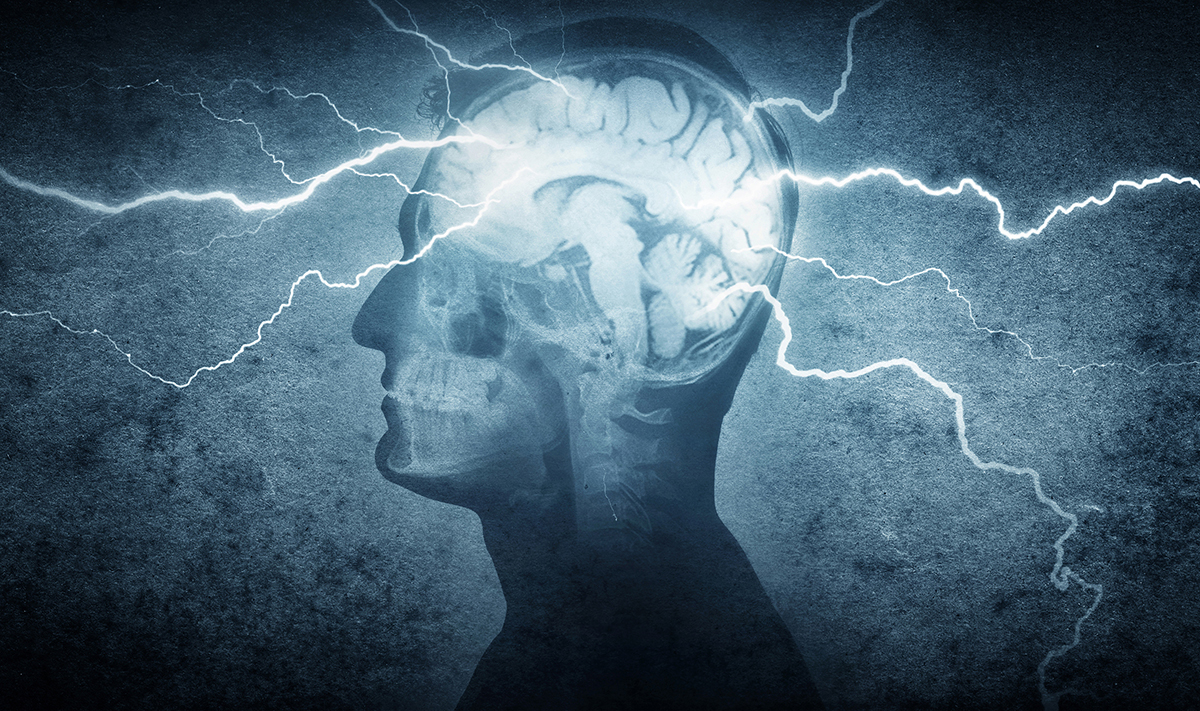
Decades of research documents that ECT can cause brain damage, memory loss, cognitive deficits, and mortality, while regulators have never required evidence of long-term safety or effectiveness.
Previous claims held that the scalp harmlessly carries 90–95% of the current harmlessly around the brain. The new study analyzed a high-resolution three-dimensional digital model of the head to track the course the current follows during an ECT treatment. The findings show the opposite: 82.5% of the total current flows through the cerebrospinal fluid (CSF) and brain, while only 1.5% flows through the scalp. The CSF acts as the major highway distributing current throughout the brain.[1]
Separately, according to one expert involved in the study, electrical energy converts into heat inside the brain. Higher current produces more heat; excessive temperature can cause temporary injury, permanent damage, or even cell death. Electricity also can create pores in cell membranes by a process known as electroporation. When the voltage is high enough, the holes overwhelm the brain’s repair mechanisms—toxic material floods in and cells die. ECT therefore risks brain-cell damage from both heating and electroporation.[2]
Professor John Read, a leading ECT researcher, confirms the parallel: “The effects on the brain [of] ECT is very similar to the effects of what’s called a closed-brain injury… there’s changes in the brain that are documented after ECT, very similar to traumatic brain injury.”[3]
CCHR has long demanded a ban and says the Food and Drug Administration’s 2018 decision to lower the risk classification of ECT devices must be overturned. Under the Federal Food, Drug and Cosmetic Act (21 U.S.C. § 360f), the FDA has full authority to ban any device posing an “unreasonable and substantial risk” of injury.
In the U.S., an estimated 100,000 Americans undergo ECT annually, and CCHR has documented it still being administered to teenagers, and in some states, children five or younger are also at risk of being given it some states.
Jan Eastgate, president of CCHR International, states: “Electroshock devices meet the FDA threshold, which need to be revisited. Decades of research document brain damage, memory loss, cognitive deficits, and mortality, while regulators have never required evidence of long-term safety or effectiveness.”
CCHR helped secure the first bans on electroshock for minors—California (1976) and Texas (1993). The World Health Organization declared in 2005 that there are no indications for ECT on minors and that it “should be prohibited through legislation.” Western Australia banned it under age 14 (with criminal penalties) in 2014; the Australian Capital Territory banned it for under 12.[4] Ireland banned it for anyone 18 and under in May 2026.[5]
Survivors describe the reality. As a teenager, Eastgate received ECT after an undiagnosed underactive thyroid was mislabeled as depression. She awoke to searing head pain, failed to recognize her mother, and later could not remember friends or parts of her education. She calls it a barbarity “like a grenade going off in her body.” Proper medical treatment for her thyroid ended her symptoms; recovery of the memory lost by shock took years.
Recently, Paris Jackson spoke out about undergoing nine “painful” ECT sessions in three weeks, recommended when she felt suicidal after psychiatric drugs and hospitalizations. She experienced severe head pain and amnesia—no memory of visits or conversations with friends despite photographic evidence. Paris recalled her doctor telling her, “It’s not as barbaric as it used to be. They use general anesthetic. You’re knocked out when they shock you.”[6]
Utah Rep. Jake Sawyer (R) received ECT in 2018 after being told it was safe with minimal long-term effects. That was not his experience: “I suffered long-term damage and memory loss. My vocabulary is nowhere near what it used to be, and making new memories is vastly more difficult than it was before,” and “I’ve lost many, many, many years of memories.” He wants ECT banned.
Eastgate concludes, “Electroshocking individuals, especially after failed psychiatric drug treatments and institutionalization that deprives individuals of their autonomy, liberty and the right to an undamaged body and life, is an unnecessary practice that patients need to be protected from. All electroshock methods for all ages should be prohibited.”
CCHR was established in 1969 by the Church of Scientology and prominent New York-based professor of psychiatry, Dr. Thomas Szasz. CCHR chapters in Europe and CCHR International executives, including Eastgate, have testified about the harm of coercive mental health practices before the Committee for the Convention on the Rights of Persons with Disabilities (CRPD), which opposes forced detainment or treatment, including electroshock. The World Health Organization’s Department of Mental Health and Substance Use has warned of ECT’s health risks, including brain damage, cardiovascular complications, memory impairment, and even death. The plan states that ECT should be banned for children and that in the absence of consent in adults, ECT should be considered abuse or torture
Sources:
[1] Kenneth Castleman, “Electric Current Density Distribution During Electroconvulsive Therapy,” IEEE EMC+SIPI 2026 Symposium, 979-8-3315-7324-9/26, 537-541. https://online.fliphtml5.com/fhmrg/emc2026_FinalProgram-7-21-26/#p=1
[2] https://www.cchrint.org/2024/08/23/the-collapse-of-electroshock/; Kenneth Castleman, “Expert Report on Electroconvulsive Therapy,” 3 Sept. 2008
[3] Bijan Esfandiari, “Electroshock Therapy (ECT) Trial – Jury Finds Somatics Failed to Warn of ECT Risks,” Wisner Baum, 16 Aug. 2023, https://www.wisnerbaum.com/blog/2023/august/electroshock-therapy-ect-trial-jury-finds-somati/
[4] https://www.cchrint.org/2025/12/08/coalition-and-cchr-call-on-fda-to-review-electroshock-device-and-the-need-for-a-ban/#_edn5; “Electroshock therapy on under-14s banned in WA after law passes Parliament,” ABC News AU, 17 Oct. 2014, https://www.abc.net.au/news/2014-10-17/mental-health-bill-passes-wa-parliament/5822874
[5] “News Report: Ireland’s Mental Health Act 2026 and the Advancement of Human Rights Foundations,” University of Isfahan Human Rights Institute, 17 June 2026, https://www.hriui.com/en/news-report-irelands-mental-health-act-2026-and-the-advancement-of-human-rights-foundations/
[6] “Paris Jackson opens up about ‘painful’ electroconvulsive therapy. She’s not alone,” USA Today, 20 Aug. 2026
About Citizens Commission on Human Rights International
Citizens Commission on Human Rights (CCHR) is an international mental health industry watchdog, established by the Church of Scientology, which has helped enact more than 190 worldwide reforms that protect the public from abuse.
Press Inquiries
Amber Rauscher
media [at] cchr.org
323-467-4242
https://www.cchrint.org
6616 W. Sunset Blvd., Los Angeles, CA 90028


Legal Disclaimer:
EIN Presswire provides this news content "as is" without warranty of any kind. We do not accept any responsibility or liability for the accuracy, content, images, videos, licenses, completeness, legality, or reliability of the information contained in this article. If you have any complaints or copyright issues related to this article, kindly contact the author above.
